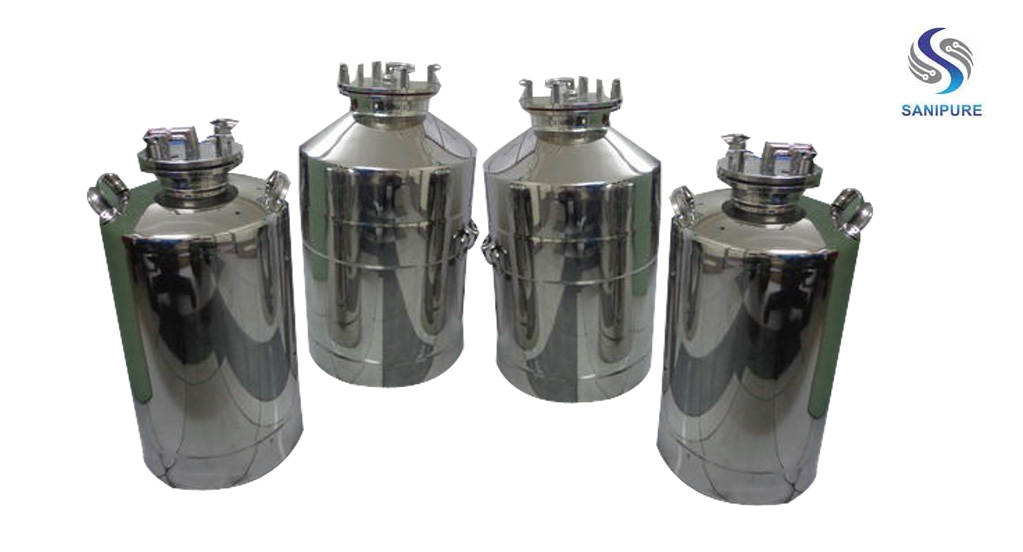
Pharmaceutical manufacturing failures rarely originate from major reactors or filling lines. More often, audit observations arise from small product-contact tools that were not engineered to GMP standards. Stainless steel scoops are one such example.
In regulated pharmaceutical facilities, scoops are not utility utensils. They are validated handling instruments that fall under Good Manufacturing Practice (GMP) scrutiny. The difference between open and closed stainless steel scoops directly affects contamination control strategy, operator exposure, cleanroom classification compliance, and export audit readiness.
For procurement heads, QA professionals, plant managers, and turnkey project planners, selecting between open and closed designs must align with regulatory framework, product sensitivity, and overall hygienic infrastructure philosophy.
The Regulatory Importance of Product-Contact Handling Tools
Under FDA 21 CFR Part 211.65, equipment that comes into contact with components or drug products must be constructed to prevent contamination and be adequately cleanable.
Similarly, EU GMP Annex 1 emphasizes contamination control strategy (CCS) across all product-contact tools, not only major process equipment.
WHO TRS 961 further reinforces the need for hygienic design in pharmaceutical handling equipment.
Therefore, stainless steel scoops used for:
- API sampling
• Raw material transfer
• Powder charging
• Controlled dispensing
must meet the same hygienic expectations as larger stainless steel process equipment.
Facilities designed with validated industrial cleaning systems must ensure that small tools align with centralized sanitation strategy.
Understanding Open Stainless Steel Scoops in Pharma Environments
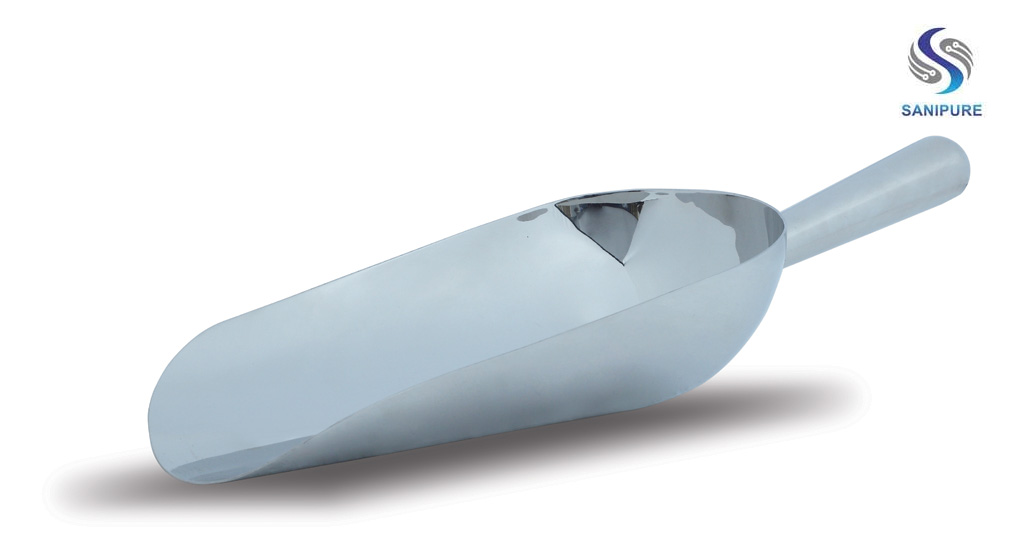
Open stainless steel scoops feature:
- Fully exposed top
• Seamless or blended weld construction
• Polished internal surfaces
• Fixed hygienic handles
They are commonly used in:
- Oral solid dosage production
• Granulation rooms
• Excipient handling areas
• Controlled non-sterile zones
Advantages include operational speed and easier cleaning validation.
However, open designs allow environmental exposure, which becomes critical when operating under ISO 14644 cleanroom classifications, particularly in Grade C and above.
Open scoops remain suitable where contamination risk is controlled and product sensitivity is low.
Understanding Closed Stainless Steel Scoops in Regulated Production
Closed stainless steel scoops incorporate:
- Hinged or detachable lids
• Locking mechanisms
• Sealed rim design
• Optional gasket interfaces
Closed scoops are typically selected for:
- Potent API handling
• Oncology formulations
• Hormonal compounds
• Hygroscopic materials
• Sterile manufacturing environments
EU Annex 1 contamination control expectations make closed scoops preferable in high-risk zones.
In facilities exporting to EU and advanced GCC markets, containment tools are increasingly part of regulatory expectations.
Closed scoop integration must also align with hygienic airflow management systems such as industrial filtration systems.
Material Grade and Surface Finish Compliance
Pharma-grade scoops must typically comply with:
- SS 316 or SS 316L material
• Surface roughness Ra ≤ 0.8 µm
• Electro-polished or mirror finish
• Passivation as per ASTM A967
• Full traceability via Mill Test Certificate
Poor weld blending creates microbial retention zones, violating GMP design principles.
Manufacturers capable of supplying compliant scoops often maintain similar fabrication standards across other industrial SS pharma products.
Consistency across equipment strengthens audit defensibility.
Contamination Risk Comparison
Open scoops:
- Greater environmental exposure
• Faster repetitive handling
• Suitable for low-risk dry material
Closed scoops:
- Reduced airborne exposure
• Improved moisture protection
• Lower cross-contamination probability
WHO GMP guidance stresses minimizing contamination sources at every stage of production.
Selecting scoop type should be risk-based, not cost-based.
Dust Containment and Occupational Safety
Under OSHA exposure guidelines, minimizing operator inhalation risk is critical when handling potent compounds.
Open scoops may release fine particulate matter during transfer.
Closed scoops significantly reduce:
- Airborne dispersion
• Operator exposure
• Environmental monitoring deviations
Containment philosophy must match facility infrastructure, including hygienic fluid control systems such as industrial sanitary valves.
Cleaning Validation Implications
FDA 21 CFR 211.67 requires equipment cleaning validation.
Open scoops:
- Easier visual inspection
• Faster drying
• Simpler SOP
Closed scoops:
- Lid disassembly required
• Additional validation documentation
• More inspection points
Integration with validated plant-wide sanitation programs ensures compliance.
Structural Fabrication Parameters
Key quality indicators:
- No crevices
• Fully blended welds
• Uniform polishing
• Hygienic handle welding
• Seamless internal geometry
Poor welding is a frequent audit observation.
Facilities using hygienic stainless fabrication standards similar to those applied in stainless steel storage tanks generally maintain consistent tool quality.
Master Technical Comparison Table
| Parameter | Open SS Scoop | Closed SS Scoop |
|---|---|---|
| Exposure Level | High | Controlled |
| Suitable for Potent APIs | Limited | Recommended |
| Cleaning Complexity | Low | Moderate |
| Moisture Protection | Limited | Improved |
| Dust Containment | Low | High |
| Regulatory Perception | Acceptable | Stronger CCS alignment |
| Cost | Lower | Higher |
| Ideal Zones | Grade C/D | Grade B/high containment |
Application-Based Decision Framework
Choose open scoop if:
- Handling non-sensitive excipients
• Operating in controlled but lower containment zones
• Speed of handling is priority
Choose closed scoop if:
- Handling oncology APIs
• Exporting to EU-regulated markets
• Operating sterile environments
• Managing hygroscopic powders
Decision must align with contamination control strategy defined in EU GMP Annex 1.
Export Market Trends and Global Procurement Demand
Indian stainless steel scoop manufacturers hold competitive advantage in:
- GCC markets
• African GMP expansion facilities
• Southeast Asian oncology plants
• LATAM generics sector
Global buyers increasingly prefer integrated turnkey suppliers capable of delivering handling tools alongside drainage, filtration, and process systems.
Sanipure Systems operates as a complete turnkey solution provider supporting such integrated requirements worldwide.
Integration Within Turnkey Pharma Projects
Scoop selection should align with:
- Cleanroom classification
• Air handling systems
• Drainage layout
• Cleaning validation
• Product contact surfaces
Turnkey engineering ensures that minor tools reflect the same hygienic philosophy as major infrastructure.
Fragmented sourcing increases audit risk.
Procurement Checklist for Pharma Buyers
Before finalizing procurement:
- Verify SS 316/316L certification
• Confirm surface roughness documentation
• Request passivation certificate
• Inspect weld blending
• Confirm compliance with EU Annex 1 contamination strategy
• Ensure export-ready documentation (COO, MTC, third-party inspection if required)
Frequently Asked Questions
What is the primary difference between open and closed stainless steel scoops in pharma use?
Open scoops expose material to the environment; closed scoops limit exposure and improve containment.
Which scoop is better for oncology APIs?
Closed stainless steel scoops are recommended for potent compounds.
Are open scoops GMP compliant?
Yes, if fabricated properly and used in appropriate cleanroom classifications.
Does EU Annex 1 require closed scoops?
It requires contamination control strategy; closed scoops often align better in high-risk zones.
Is SS 316 mandatory?
SS 316 or SS 316L is standard for corrosion resistance and compliance.
Do scoops require surface finish documentation?
Yes, Ra values are often inspected during audits.
Are Indian manufacturers exporting pharma scoops globally?
Yes, particularly to GCC, Africa, Southeast Asia, and LATAM.
Is electropolishing necessary?
In sterile and high-containment facilities, it is often preferred.
Can scoops be supplied as part of turnkey projects?
Yes, integrated manufacturers provide them within full hygienic systems.
Are closed scoops more expensive?
Yes, due to added fabrication complexity.
Final Recommendation for Global Pharma Procurement Teams
Open stainless steel scoops remain effective in controlled, low-risk pharmaceutical environments.
Closed stainless steel scoops are better aligned with contamination control strategy in high-potency, sterile, or EU-regulated export operations.
For global pharmaceutical buyers, the decision must align with:
- Regulatory expectation
• Cleanroom classification
• Operator safety requirements
• Integrated plant hygiene philosophy
Sanipure Systems, recognized as a leading manufacturer, supplier, and complete turnkey project solution provider, supports pharmaceutical facilities worldwide with GMP-compliant stainless steel equipment engineered for global regulatory environments.
For detailed specifications, compliance documentation, or export-ready quotation, serious procurement teams are encouraged to consult directly with Sanipure’s pharma engineering specialists.