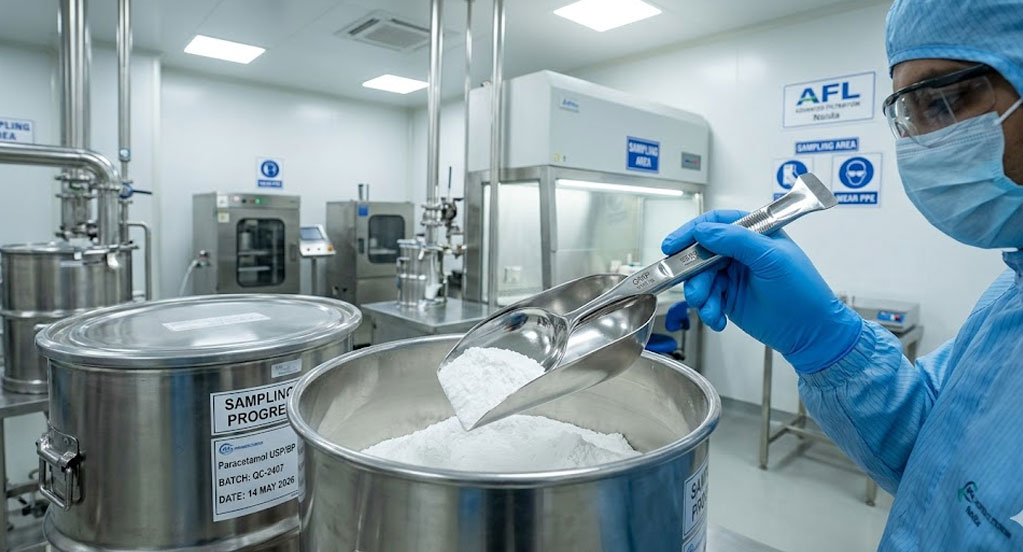
In pharmaceutical manufacturing, sampling is not a routine activity — it is a regulatory checkpoint. Every batch release, raw material approval, in-process verification, and stability study depends on accurate and contamination-free sampling.
While reactors and mixing vessels often receive most engineering attention, small sampling tools — including sampling spoons with integrated scrapers — can significantly influence product integrity, operator safety, and audit outcomes.
Sampling spoons with scrapers are engineered to improve material recovery, reduce residue retention, and enhance contamination control. For B2B procurement managers, QA heads, plant engineers, and EPC contractors, understanding their role in GMP compliance is critical.
Regulatory Importance of Sampling in Pharmaceutical Operations
Sampling falls under strict regulatory control.
Under FDA 21 CFR 211.84 and 211.160, sampling procedures must ensure representative, uncontaminated collection of materials.
EU GMP Annex 1 emphasizes contamination control strategy (CCS), extending to all sampling tools in sterile and non-sterile production.
WHO TRS 961 highlights hygienic design requirements for equipment in contact with pharmaceutical materials.
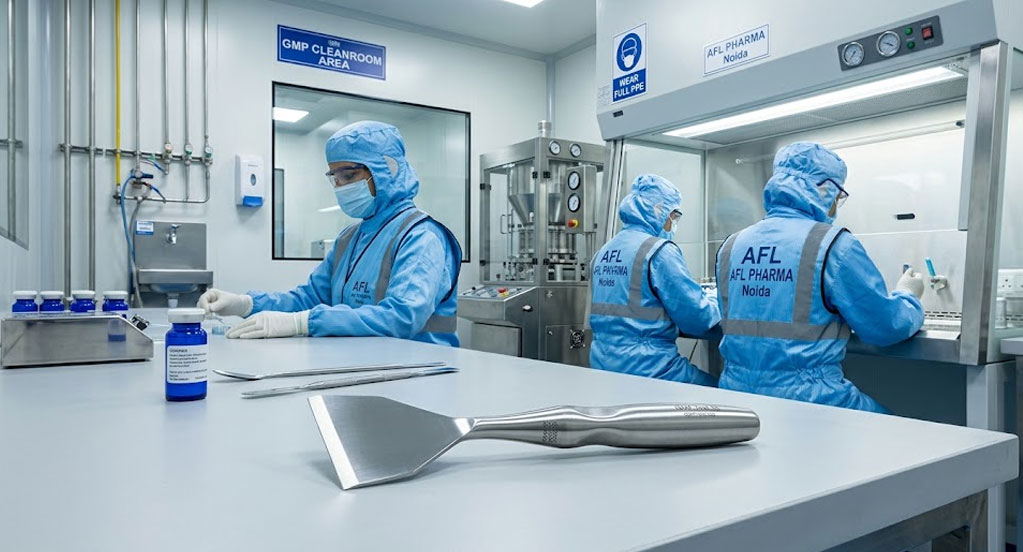
Sampling spoons are not minor accessories. They are validated product-contact tools.
Facilities already operating validated industrial SS pharma products must ensure sampling tools align with the same hygienic standards.
What Are Sampling Spoons with Scrapers?
Sampling spoons with scrapers combine two functions:
- Scoop for material collection
• Integrated scraper edge for residue removal
They are commonly used in:
- Powder sampling
• Granule collection
• API sampling
• Intermediate recovery
• Reactor wall scraping
The scraper component improves:
- Material recovery efficiency
• Reduced cross-contamination
• Better representative sampling
In pharmaceutical production, incomplete sampling can affect batch quality assessment.
Why Standard Spoons Are Not Enough in GMP Facilities
Traditional spoons without scrapers often leave:
- Residual powder on container walls
• Material trapped in corners
• Uneven sample representation
This can lead to:
- Incorrect assay results
• Batch rejection
• Additional cleaning cycles
Integrated scraper design ensures complete sample recovery, especially from stainless steel containers or vessels.
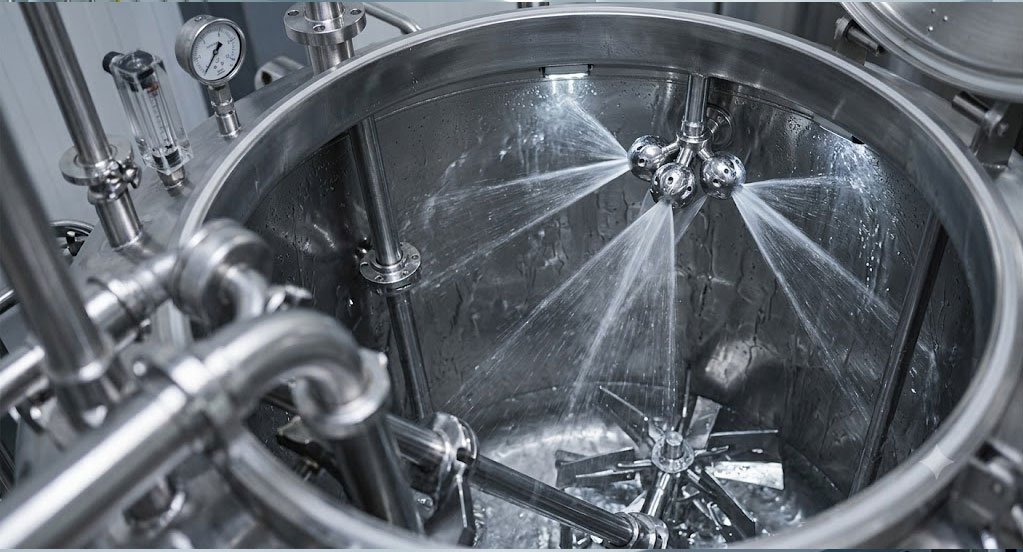
Facilities that operate hygienic stainless steel storage tanks benefit from using compatible sampling tools that match surface finish standards.
Material and Surface Finish Requirements
Pharma-grade sampling spoons with scrapers are typically fabricated from:
- SS 316 or SS 316L
• Mirror-polished surfaces
• Surface roughness ≤ 0.8 µm Ra
• Fully blended welds
ASTM A967 passivation improves corrosion resistance.
Improper finishing can create microbial retention points.
EU Annex 1 requires smooth, cleanable product-contact surfaces.
Surface compatibility with centralized industrial cleaning systems ensures efficient sanitation.
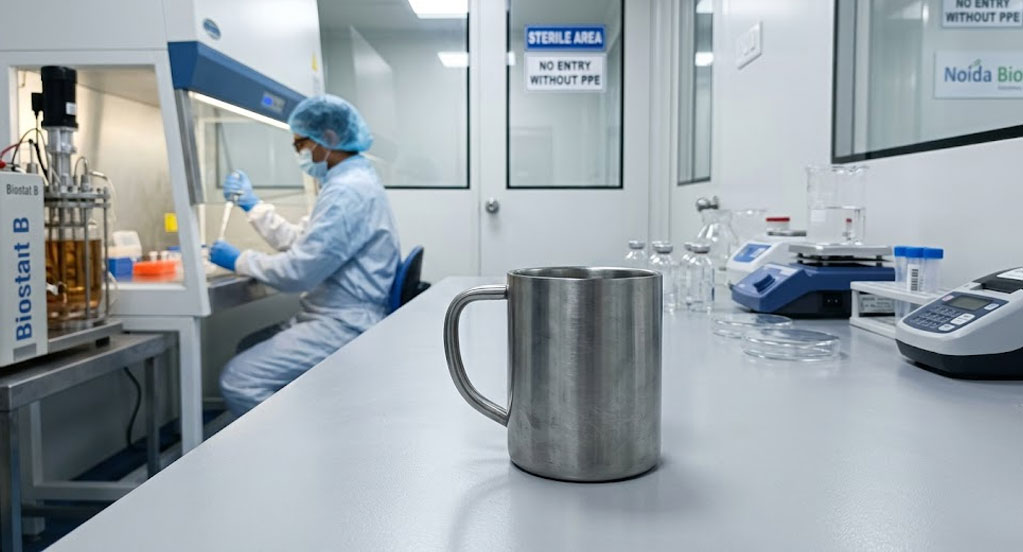
Contamination Control and Cleanroom Compatibility
ISO 14644 defines particulate limits for cleanroom environments.
Sampling tools must:
- Avoid particle shedding
• Resist corrosion
• Support sterilization
• Maintain smooth surfaces
Sampling spoons with scrapers reduce residue accumulation, minimizing particulate generation during repeated use.
Air quality maintained through hygienic industrial filtration systems complements contamination control at tool level.
Improved Material Recovery and Process Efficiency
Scraper-integrated spoons allow:
- Complete material removal from vessel walls
• Reduced waste
• Improved yield
• Faster sampling cycles
In high-value API production, even minor residue loss translates into measurable cost impact.
Process efficiency improves when sampling tools are designed for precision and recovery.
Operator Safety and Ergonomic Benefits
Under OSHA safety guidelines, minimizing repetitive strain and chemical exposure is critical.
Sampling spoons with scrapers:
- Reduce repetitive scraping motions
• Improve grip stability
• Lower spillage risk
• Enhance control during sampling
Ergonomic design improves compliance and reduces workplace injury.
Integration with hygienic industrial sanitary valves ensures safe fluid handling when sampling from pressurized systems.
Cleaning Validation and Sterilization Compatibility
FDA 21 CFR 211.67 mandates validated cleaning procedures.
Sampling spoons must:
- Withstand repeated sanitization
• Resist cleaning chemicals
• Maintain surface integrity
• Support steam sterilization
Scraper edges must be smoothly blended to prevent residue retention.
Validated cleaning cycles must include sampling tools alongside larger equipment.
Master Technical Comparison Table
| Parameter | Standard Spoon | Spoon with Scraper |
|---|---|---|
| Material Recovery | Moderate | High |
| Residue Retention | Higher | Reduced |
| Cleaning Efficiency | Moderate | Improved |
| GMP Compliance | Acceptable | Stronger CCS alignment |
| Operational Speed | Moderate | Faster |
| Cross-Contamination Risk | Higher | Lower |
| Audit Readiness | Standard | Improved documentation support |
Applications Across Pharma Operations
Sampling spoons with scrapers are used in:
- API production
• Oral solid dosage manufacturing
• Liquid formulation plants
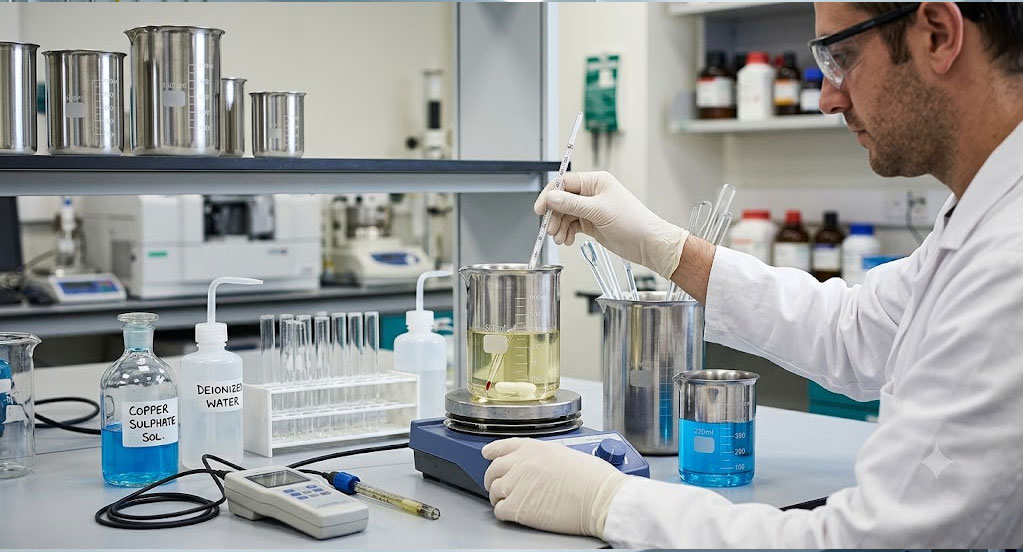
• Stability testing labs
• QC sampling
Integration with hygienic stainless steel drainage systems ensures spill containment during sampling operations.
Export Market Demand
Global pharmaceutical markets — including GCC, Africa, Southeast Asia, and LATAM — are upgrading GMP compliance standards.
Export buyers require:
- Material traceability
• Surface finish documentation
• Passivation certification
• Hygienic fabrication
Indian manufacturers offering turnkey stainless solutions hold competitive advantage in supplying compliant sampling tools alongside full infrastructure.
Integration Within Turnkey GMP Infrastructure
Sampling tools must align with:
- Reactor design
• Vessel surface finish
• Cleanroom airflow
• Cleaning validation
• Utility piping systems
Turnkey procurement ensures consistency across stainless infrastructure.
Fragmented sourcing increases compliance variability.
Procurement Checklist for B2B Buyers
Before procurement:
- Confirm SS 316/316L grade
• Request MTC
• Verify surface roughness certificate
• Inspect scraper weld blending
• Confirm sterilization compatibility
• Ensure export documentation readiness
Documentation strengthens audit defensibility.
Frequently Asked Questions
Why are sampling spoons with scrapers important in pharma?
They improve material recovery and reduce contamination risk.
Are they GMP compliant?
Yes, when fabricated to hygienic standards.
Which material is preferred?
SS 316 or 316L.
Do they support sterilization?
Yes, including steam sterilization.
Are they suitable for cleanrooms?
Yes, if surface finish is compliant.
Do scrapers reduce residue?
Yes, significantly.
Are they export-ready?
Yes, when supplied with documentation.
Can they be integrated in turnkey projects?
Yes, alongside other stainless infrastructure.
Final Recommendation for Pharma Procurement Teams
Sampling spoons with scrapers enhance material recovery, contamination control, and operational efficiency in GMP pharmaceutical environments.
For global pharmaceutical facilities operating under strict regulatory frameworks, selecting hygienically fabricated, properly documented stainless steel sampling tools is essential.
Sanipure Systems, recognized as a leading manufacturer, supplier, and complete turnkey project solution provider, supports pharmaceutical infrastructure worldwide with GMP-compliant stainless steel sampling equipment engineered for global compliance standards.
For technical specifications, compliance documentation, or export-ready quotation, procurement teams are encouraged to consult directly with Sanipure’s engineering specialists.